Conversations with Erica featuring Lisa Griffith - Audio
Erica Mattison: Welcome to Conversations with Erica. I'm your host executive coach, Erica Mattison.
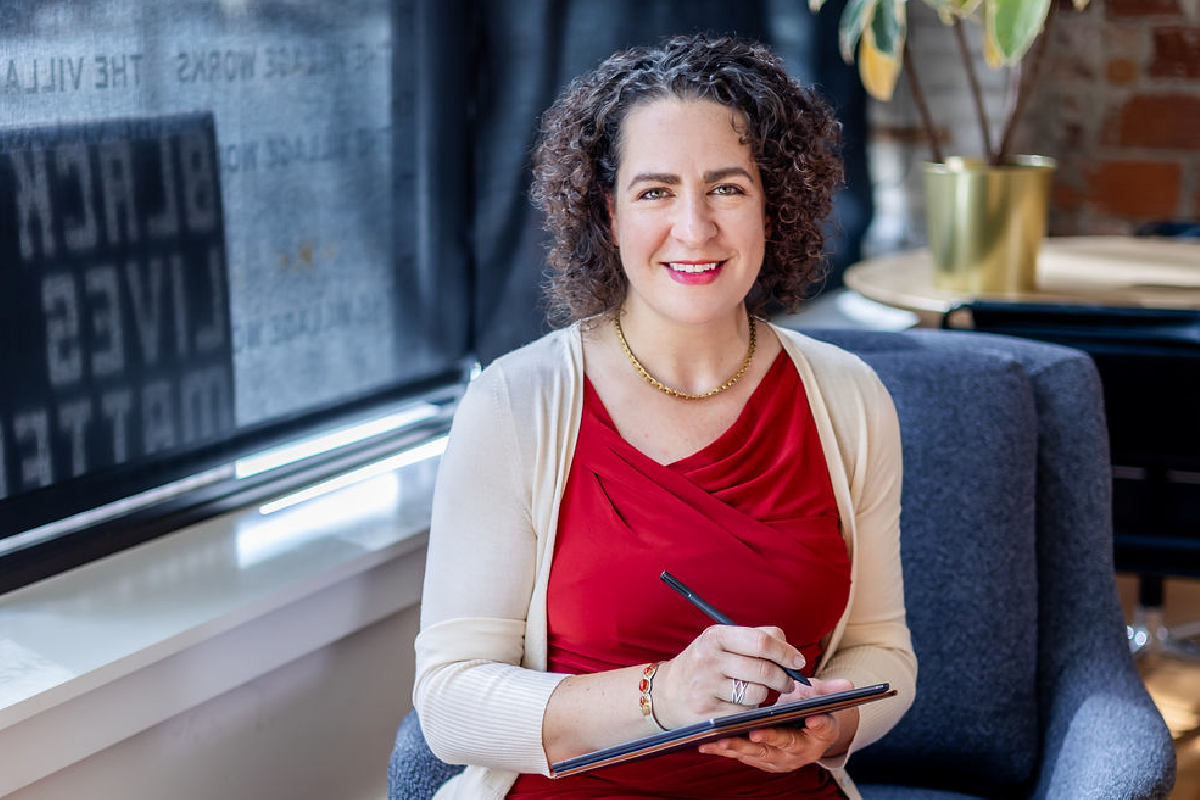
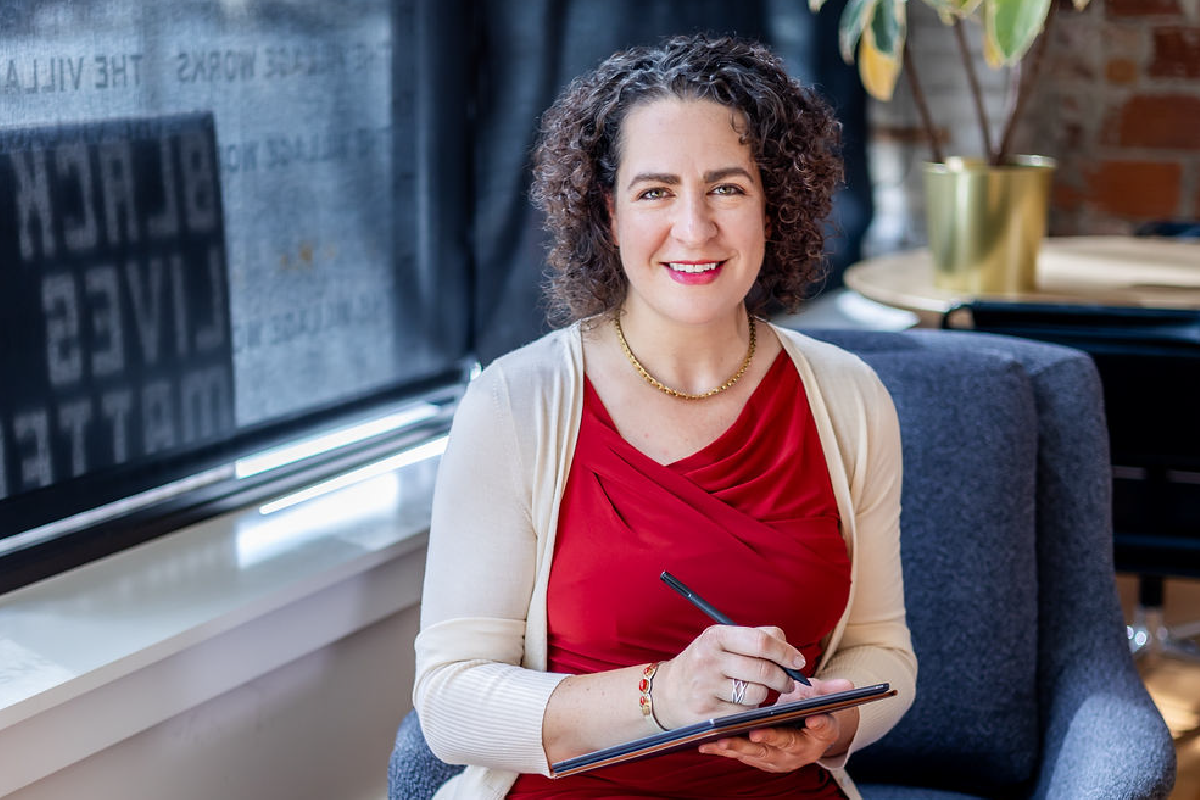
Lisa Griffith is a productivity coach, certified professional organizer, speaker and trainer who helps professionals create systems that support, focus, clarity, and sustainable productivity. Drawing on more than 30 years of experience as a teacher director and performing arts administrator. She brings a practical and human-centered approach to helping people organize their workspaces, time and responsibilities through her business, Griffith Productivity Solutions, she works with individuals and organizations to address overwhelm and strengthen executive functioning so they can follow through on priorities and make better use of their time and energy.
Lisa and I had the opportunity to meet through an organization called the Association for Talent Development. We both were speakers at their annual regional conference, and so it was great to be with a bunch of folks in the learning and development space.
Uh, Lisa, I'd love to hear a little bit about your work and what you're up to these days.
Lisa Griffith: I am a productivity coach and consultant and a certified professional organizer. I also do a lot of speaking and training in the academic world and the corporate world, and the nonprofit world. So I, I love particularly working with folks who are neurodivergent.
Uh, many of my clients have struggled with, a DHD or executive function and or executive function issues. Um, so that's kind of my, my sweet spot. I segued into doing exclusively as a certified professional organizer working exclusively in workspaces um, and whether that's at home or in a business setting or an academic setting. I started
as a professional organizer doing everything everything, basements, closets, kids, playrooms, all of that. And I realized about 10 years ago that my sweet spot was helping folks in the workspace, whether it's a, a, an entrepreneur or a small business owner, or just someone in the corporate world who needs a little more clarity and a little more, uh, direction, I guess is the best way to say it.
Erica Mattison: Awesome. Well, I loved learning about your work when we were at the conference together, and since then I've been thinking about your work and, uh, there's a lot of synergy between our work because also a lot of the folks who I serve have a DHD and so neurodiversity is, is a big part of my life and the work that I do with folks, entrepreneurs.
Mm-hmm. Leaders within organizations. People who are navigating career transitions and you know, people who are really looking to feel at peace and also to have impact. Mm-hmm. Um, so could you share a little bit more about the ways in which you support your clients?
Lisa Griffith: So I work both, uh, virtually with folks who are not in the Providence Metropolitan area and onsite.
And. 90% of the time the phone call I get is from someone who is just overwhelmed. They are either overwhelmed in their physical workspace, whether, and it's often a home office, but not always. Um, and they need to get a handle on, you know, I have paper piles everywhere and I can't find anything. Or they may live exclusively in the digital world.
And I hear, I have no idea how to get done everything I have to get done. I'm absolutely overwhelmed. Uh, and some of it is women who are also dealing with the emotional labor of carrying everything in their home lives as well. So I do a mix of coaching and consulting. I lean more towards the coaching end of things 'cause I find that
coaching is more of a collaborative process. I was a, a teacher for a long time and a parent, and as teachers and parents, we tell people what to do and that's what a consultant does. And sometimes that's very appropriate, but a lot of times, the solutions to what my clients are looking for lies within them.
You know, the coaching world says that people are creative, resourceful and whole. I'm sure you've heard that many times and that's been born out time and time again in my work with folks. Um, so I do a mix of both. I do some onsite stuff, but I do a lot of virtual coaching as well and I found that you know, every client is different.
And I'm sure you know that with the work that you do, every client is different. They almost always come to me with, I'm overwhelmed and I, I'm not getting enough sleep. I don't have enough time to get done what I'm getting done. And so often we start there and sometimes we start with the physical environment or the digital environment and then some, or sometimes we often move into the, the, what I call a time clutter environment, which is their calendar and their to-do list and working out better ways for them to function. I always say to my clients, you have a whole list of things you know you have to do, but do you ever get to the stuff you really want to do?
And a lot of times that's my goal, is to get them to the point where they have time, not just to get done what they have to get done for work or for their family, but to get to the stuff that brings joy to their lives. Sometimes it's volunteer work, sometimes it's a hobby, sometimes it's being able to spend more time with their family.
So that, that's my primary goal.
Erica Mattison: So when it comes to overwhelm what are some of the frameworks or mindsets that you're able to share with your clients that you've found to be particularly transformative?
Lisa Griffith: Sometimes it's just an enormous brain dump. Let me get everything outta my head that I, I know I have to do that.
I think I have to do that. I feel I should do that. I wanna do, and then it's a prioritization issue going through that. I had one client who, lovely, incredible woman. She was a law professor. She was a single mom. She owned a very challenging historical home that required a lot of work, and she was very active in her community, her church doing a lot of volunteer work, and we did a massive brain dump for her and it involved
pulling all the lists, all the to-do lists from her phone, from her planner, all the sticky notes that she had everywhere, and we put that all together. And then I had her put up, this is something I do with a lot of my clients, an approximate time estimate as to how long she thought each thing would take.
And when we finished, she must have had, of course she had a legal pad, you know, as a law professor, and we must have had four or five single spaced pages filled. And she looked at it and we kind of added it all up and she looked at me and she said, I won't live long enough to do all of this stuff. And that was kind of the point that I like to make with my clients.
We have to get down to what your priorities are. Sometimes that involves investigating what their values are and what their needs are. And we talk about that and then we look at this enormous list or we look at their overwhelmed calendar and I say, where where do we see those values in that calendar?
Do we see a meshing or is it, these are the things that are important to me over here, but these are the things I'm making time to do. And so that is usually the very first. Thing that I do with folks to kind of get everybody centered and to get everybody more realistic about, you know, I have 24 hours a day, I have to spend some of them sleeping.
I have to spend some of them eating. Hopefully, I have to do my laundry, I have to make sure I have some food in the house, that kind of thing. And once we get past that, what's left and where do we start where you are feeling like I have a handle on this. I have a little more, and control's not a great word 'cause we're never really in control, but I have a little more perspective on what I'm doing and why it's important and how do I get to do the real important stuff first.
Erica Mattison: I know you said that every client is different and, and that sounds familiar. But I'm wondering, does there tend to be a typical amount of time that you work with clients?
Lisa Griffith: No there's no typical amount. Uh, virtually coaching sessions are usually an hour. Sometimes the initial session is an hour and a quarter, hour and a half, so we can get to know each other. Onsite I don't usually do more than two to three hours because people just. Burned out, especially if you're trying to make decisions about paperwork or digital files, people it's tough to focus even, even if someone doesn't have trouble with focus it's tough to go that long. So those are the parameters I kind of work around.
Now, I have clients who come in for just a couple of sessions and that's all they want. That's all they need. I have clients I work with regularly at weekly or every couple of weeks, and then I have clients who do a big chunk of work with me, and then they feel that they're ready to either take a break or they've accomplished what they wanna accomplish.
We do some maintenance work once a month or once every couple of months. I have one client. When I first started working with him in his home office, we worked both in business and in home office. And the home office had piles of papers so high you could only see the top couple of inches of his computer monitor and every time he worked, he had to shove all that paper onto the floor. And so we have an agreement that once a month he sends me a picture of the surface of his desk and can we see some of the surface of his desk or has it gotten to that point again? And he's promised not fake it, not to move everything and then take the picture, and that's kind of his signal that, okay, it's time to schedule a maintenance session with Lisa. Paperwork's piling up. Next I have to get him to take a picture, a screenshot of his desktop screen to see what his digital. Desktop is looking like
Erica Mattison: Sometimes we shift the issues from one area of life to another. Yes, exactly. So if
Lisa Griffith: exactly, if we have an issue with
Erica Mattison: paperwork, now we have an issue with our,
Lisa Griffith: with digital stuff. Yeah, exactly. Exactly. So I had a client, hilarious. She's so much fun. She's an artist and she runs a business and she sent me a text and I had, I didn't have her number in my context as, as her name.
I just had her number, excuse me. And she sent me a meme of a dumpster fire saying, this is what my digital files look like. And it took me a minute, oh, I know who this is, but those are the little signals I get every once in a while. This is what it looks like. It's a dumpster fire. Come help.
Erica Mattison: Absolutely. So when it comes to supporting people with their organization, are there particular mindsets that you've identified that can really be stumbling blocks for people?
Lisa Griffith: Yeah, one of the biggest ones is not making timely decisions. Especially when it comes to physical clutter, paperwork especially, it piles up because people, they get a bunch of snail mail or they get a bunch of paperwork from their business and they pick it up and they look at it and they say, I don't know what to do with this.
I don't know whether to keep it or whether to let it go. If I keep it, where do I put it? And they set it aside. And you do that enough times the piles grow, or you are using a physical piece of paper as a visual cue to remind you to do something, but the problem is the visual cue gets lost when there is a pile and under that, and so they forget.
Or it gets pushed aside because they can't see it anymore. So that's one of the first things that we talk about is how can we eliminate that lack of decision making? Let's set some parameters up. Those decisions aren't so painful for you. Let's set up some criteria. I'm gonna decide that I'm gonna keep all this, but I'm gonna let all this go, or I'm gonna keep this for this amount of time, or I'm gonna function in this particular way.
That's a workflow systems thing that we talk about a lot. I think that lack of decision making is the hardest thing. And the other thing is what gets in their way is lack of prioritization, as I mentioned before, you know, thinking that everything is important. And when everything is important, then nothing is really important.
Erica Mattison: How do you see lack of organization and clarity getting in the way of people leading, rewarding, successful careers?
Lisa Griffith: Because they're spinning their wheels a lot of time and they're wasting a lot of time, you know, scrolling through digital files, hitting that search button every time, or digging through piles of paper or looking at their calendar or their to-do list for the day and saying, I don't even know where to start.
And they just kind of plunge in and the first order of business is to sit down, take a deep breath and say, all right, where am I aligned in this work? And how do I figure out what's the most important and what do I let go,
Erica Mattison: so prioritization sounds like it's a really important part of the work.
Lisa Griffith: Yeah, it is. A lot of times I say to my clients, well, you tell me your priorities are this. Cool. That's great. Then I look in your to-do list and in your calendar. I don't see a whole lot of this over here. There's a disconnect and one of my first jobs is to have them acknowledge that there's a disconnect and then we can start working on it.
Erica Mattison: Yes. I noticed that also in my work with clients that,
Lisa Griffith: yeah,
Erica Mattison: helping people acknowledge what the situation is, is extremely powerful as a starting
point.
Lisa Griffith: Exactly. I'm sure you do that quite a bit. Yeah,
Erica Mattison: Yes. When I was working on my master's degree in public administration several years ago I learned about budgeting from a from a public management standpoint. Mm-hmm. One of my professors said something to the effect of. A budget is a policy document.
It is a statement of values, and I have taken that principle forward with me through my career. As an environmental protection lobbyist and as a business owner and as a coach. Thinking about not only how we use our financial resources, but also our time and energy resources.
And it really is a statement of our priorities and our values as you were talking about.
Lisa Griffith: Yeah, absolutely. And the money is the one of the first cues, right? If you tell me that this is important to you, but then I look in your credit card statement and I help a lot of folks, uh, call through credit card statements, and if I don't see what you say is important in what you're spending money on, then we have to reevaluate that.
We have to question that, right?
Erica Mattison: Definitely. So tell us a little bit about how you got into this kind of work, starting your business and things like how do you find your clients? I imagine a lot of it is through referrals and word of mouth.
Lisa Griffith: Yeah, it is. As I mentioned before, I was a teacher and I was a, an administrator for performing arts in churches and at schools.
And taught for a long time. And I got to the point where I was burned out. I was looking for something some other way, some other direction to take my life. And I thought to myself, well. You're a teacher, you have certain skills in that respect. But how can I transfer them? How can I translate that?
And you help people do this all the time. And I went to a career coach who helped me enormously. She specialized in working with middle-aged women in career transitions. And I'm betting you do a lot of that too. Um,
Erica Mattison: I do.
Lisa Griffith: Yeah. And she put me through the mill, all this, ability, not ability tests, but what I'm looking for, affinity testing and all of that kind of stuff.
Erica Mattison: Self-assessments,
Lisa Griffith: yeah. Assessments, all of that. Plus many difficult conversations about, this, what's a priority and all of that. And. She finally asked me, look, I hear the same theme throughout our conversations, that you have an eye for putting things in order and you have an eye for pattern recognition, and you have.
The ability from all your teaching to convey information and to work with folks to effect change. And she said, so she brought up a bunch of fields and one of them was professional organizing. This is 20 years ago. And I looked at her, I said, I don't even know what that is. She said, it's stuff you've been doing all along as an administrator and, and this and that.
She said, this is something that I see as a skillset for you. So I investigated and she connected me with Nepo, which is the National Association of Productivity and Organizing Professionals. It's a long name. And I said, oh my God, I found my tribe. These are my people. You know, as the person people were always coming to, to help sort things out.
Students with backpacks overflowing or I was the executor. I can't tell you of how many family estates because Lisa could keep track of it. Lisa's the organized one. So I did some investigating. I got some training I did some classwork. I opened a very nascent burgeoning business. I was teaching 75% time four days a week.
And I jumped into running my business the other three days a week. I still had kids at home to parent. Um, and it was exciting. It was exhilarating, but it was exhausting. But after about a year and a half, I said to my husband, you know, I think I can, I think I can make this work. And he said, you're gonna quit a steady job with a steady paycheck and health insurance. My health insurance was the family's health insurance to start a business. You don't know how to run a business. I said, you're right. I don't, but I'm gonna learn. And he was, he is a good sport and he was very supportive. So I opened a professional organizing business and as I mentioned to you before, I did everything, all kinds of physical spaces.
And I realized as I was doing that work that it was so important for me, not just to leave someone with a better space, but to leave them with the tools so that they could maintain that space on their own. And some people are better at that than others. And as I mentioned, it led me into the productivity and time management field because a lot of that is tied in to physical spaces. And so I got a lot more training in productivity and coaching. Uh, just finished some more coaching training, uh, about a month ago, and it was my sweet spot. So I moved solely into that. And then the pandemic kind of kicked that into high gear. 'cause I couldn't go into people's spaces physically anymore.
So about five years. Almost all virtual, although I do have some local clients that I really enjoy seeing, and the speaking and training part came about very naturally because I've been a musician my whole life. I've been accustomed to getting up and doing a lot of performing. So, and as a teacher, you know, I always joked with friends that if I can entertain a class of sixth graders for 45 minutes and not have open rebellion or sleeping, I'm doing okay.
So that also became a big component of what I was doing. So that's, that's how I got where I am at this point.
Erica Mattison: I appreciate that your business has evolved over the years.
Lisa Griffith: You
Erica Mattison: started very generally, and then you found your niche and you really leaned into that around workspaces.
Lisa Griffith: Yeah. And you know, the productivity coaching part and the time management part, because I realized you can do all this work and get yourself to the height of a beautiful space, a well organized space, a space where your workflows are working for you, but if you don't have decent time management and productivity skills, you're not gonna be able to keep it up so that's what led to that. That second part of the business that I added about eight or nine years ago.
Erica Mattison: And something else about the story that you shared, Lisa, is that you were paying attention to the aspects of the work that you were really enjoying.
Lisa Griffith: Mm-hmm.
Erica Mattison: And you decided to focus on that. You didn't try to be all things to all people.
Lisa Griffith: Yep. It took me a while to get there. I was ready to throw in the towel and I had a business coach say to me, well, what do you look forward to when you get up in the morning what kind of client do you look forward to seeing? And I said, an entrepreneur or someone who is struggling with their time and their energy and their space.
And she said, well, why don't you just do that? It was literally a mic drop moment for me. I kind of went, oh, I can do that. And she said, you can do whatever you want. You know, that's, that's the bonus of running your own business. So I said, oh. And so I niched down. And let me tell you, when you start saying no to people, it's hard because you're not getting the income that you did get by taking anyone and everyone, but the work resonated with me so much more. And it, it takes time when you say no enough and you refer to enough colleagues, but then the colleagues start referring back to you, oh, I have this person who I'm not qualified to help them with productivity, but I'm sending them to you.
A lot of my business comes from the speaking that I do. I speak to a lot of groups, business groups, community groups. A lot of it comes through that. But like you said, most of my business comes through word of mouth. It comes through other clients who have said, oh, you know, I've been working with this great consultant or this great coach, and it sounds like she could help you too.
I'm sure that's how you are finding clients as well. Yeah.
Erica Mattison: Yes, definitely. Some other things that I appreciated about your career journey story are that you thought about your transferable skills. You worked with a career professional to help you. Really take an inventory. Take stock.
Of your past experience and what you were wanting more of and what you were wanting less of.
Lisa Griffith: Yes.
Erica Mattison: And really identifying themes and different possible paths for you to then go do some exploration around.
Lisa Griffith: Exactly. It was a huge help. I'm not sure what I would be doing today if I hadn't approached, and hired this person to help me out.
I would probably still be trying different things. I might still be teaching. There are times when I get a little pang because I loved teaching. I loved working with the students. I didn't miss all the other stuff that went around it. Right? So I have to, when I get that little pang, I have to remind myself this is not a hundred percent joy.
Erica Mattison: Some other things that I want to pull out from your story are around starting your own business. And
for many people they can think about. What is it that people seek them out for?
And where is the intersection between that and what they enjoy and would like to be doing more of? And that can really provide some valuable insights. You know, with your story. I can relate. Many years ago, a lot of people were coming to me for my career insights because they were wanting to make pivots, especially into social impact types of careers in spaces like sustainability, which is where I was working at the time. Uh, doing environmental work and working to advance the people profit and planet aspects of organizations. And so that's how I got into it. It started out simply helping lots of people and not charging a thing for it.
And then realizing that I had something of value to offer and I wanted a more organized, structured way to support people and I wanted to help them create really meaningful change in their lives. And there's only so much you can do in 1 45 minute coffee with someone. And so that was part of what prompted me to start it as a business at the beginning. Yeah. It was a side business. I had a full-time job. I had benefits through my employer and over time as I thought about what I wanted in my life and what I felt like I was being called to do and seeing the kind of impact that I was able to have with my clients.
That helped me also working with a business coach, decide to go all in with it. And that opened a lot of possibilities for me to be able to now be doing my podcast, having published my book speaking engagements and all of these kinds of things that were more challenging when I also had a full-time nine to five.
Lisa Griffith: Oh, yeah. I'm sure you found the same thing when you get this, lightning bolt kind of feeling like my career coach asked me what do people ask you to come help them with outside of your profession, what are they asking you to come help with? And you're finding that people were coming to you for career pivoting advice and all kinds of stuff.
And that's when I said, I'm the family organizer. I'm the family executor. I'm the student organizer at school. It's a different way of looking at yourself. Oh I don't have to just do this, but because I've done this, it has given me skills and experience in order to do this too.
It was a real eye-opening way for her to get me to think about things differently.
Erica Mattison: I've worked with a lot of educators and much like you, Lisa, they love so many things about teaching and also have experienced that burnout or that curiosity about what else could be out there for them.
Maybe they're looking for better compensation or a change in lifestyle. Maybe they wanna be able to do more of their work remotely and have more flexibility. In terms of location and schedule. And so it's really interesting hearing you talk about the evolution of your career and how you were able to take those skills in that experience as a classroom teacher and then parlay that into what you're doing now.
Lisa Griffith: You know, somebody else gave me my paycheck for 30, 25, 30 years. I got a paycheck. I didn't have to think about sending out invoices, balancing books, you know, marketing, Ugh.
Marketing marketing, i'm a big believer in paying for expert help. Big believer in that, and I talk to my clients about that all the time. Paying for expert help.
Maybe you need, an administrative and assistant or a virtual assistant. Maybe you need to pay someone to come in and clean your house every couple of weeks because it enables you to free up that time to be doing things that are not just things that you love to do, but to clear the other stuff away so you get to do the stuff you love to do.
I have a special warmth for people starting small businesses because I've been there. I know what it's like. It's exhilarating and it's exhausting all at the same time. And usually you can't quit your day job, right? You gotta hold onto that for a while. And so managing that, and a lot of the business owners that I work with call me in after the fact I've been in business now a couple of years.
I finally quit my job. I'm overwhelmed because they didn't think through the processes that they needed to have in place. So we have to back up and say, all right, let's look at this. Let's look at this and this is the process you need to have to make this work and this is how you manage your time and this is when you do your marketing.
I have a special place in my heart for that, 'cause I've had to do it, you know, working not just in your business, but working on your business.
Erica Mattison: Definitely, there's so much to learn when you're starting a business and there are a lot of different components. It's not necessarily realistic to think that you're going to become an expert in all of it, and so I exactly agree what you said, Lisa, about the importance of finding people to learn from, to collaborate with, to get support from.
To delegate to and outsource certain things to, whether it's your home life or your work life. Mm-hmm. If you have a nine to five and or you have a business trying to do it all yourself and just learn all of the things, uh, it can be a real challenge. And so it can be incredibly important to think of it more as a village.
Lisa Griffith: Mm-hmm.
Erica Mattison: To help you do this thing.
Lisa Griffith: Exactly. I'm curious to know, was it a challenge for you? You were working a very demanding job and setting up your business at the same time. How did that work for you?
Erica Mattison: For me, it was very slow and organic. Mm-hmm. As I said, I was supporting many people before I even started the business.
Then when I started the business, that was nights and weekends while I had my nine to five job, which I was very passionate about. Very invested in. Yeah. As an environmental protection lobbyist. That was after I completed my law degree, because let's just say that working full-time and going to law school at night is enough for me.
Lisa Griffith: I can't even, Ima I can't even imagine that, Erica, I cannot even imagine how, I don't know how you had the time for it. That's a lot.
Erica Mattison: I had good practice because I did my master's degree at night while I worked full time and later did it to myself again when I got my law degree. The grad degree was a good practice run, you could say for doing that with law school, which was, for me a much more intense, demanding challenge.
Lisa Griffith: Oh, I can imagine.
Erica Mattison: Experience, uh, just,
Lisa Griffith: mm-hmm.
Erica Mattison: Huge amounts of reading and content to absorb and memorize and, uh, it really stretched me.
Lisa Griffith: Mm-hmm.
Erica Mattison: So once I was done with that, then I was able to work on other aspects of my life.
Lisa Griffith: Sure.
Erica Mattison: And so one of those was. Serving people, as a coach. Mm-hmm. Mm-hmm. Um, and so it just grew bit by bit.
Yeah. Year after year, I kept learning and growing and finding ways to invest in myself as a career professional and as a coach. And over time, for instance, during the pandemic, I was able to take part in certain trainings and get different credentials as a life coach. Mm-hmm. And as a career coach.
Mm-hmm. And then over time, my business has moved more into the executive coaching space. Mm-hmm. So supporting people who are leaders within organizations to help them be more effective and reduce burnout for themselves and their team members. Yeah. So I think a lot of it comes down to some of the things that you were sharing about too, Lisa, things around prioritization.
Managing my time, my schedule, my energy, my finances. I have relied on other people, many of whom I've hired as consultants to help me navigate these different areas and learn. Mm-hmm. Speed up my learning essentially. Yeah. I also read a lot and listen to a lot of podcasts and have participated in many webinars and workshops and conferences. But there are only so many hours in the day. So there are a lot of things that I would love to do and things I'd love to learn and more certifications I'd be interested in obtaining. But I've learned that I need to pace myself and I can't try to do everything this month or even this year.
Some things just have to wait and it really is a matter of constantly prioritizing and checking in and seeing how things are feeling. Is it time to bring on more clients or is it time to focus my energy in another space? So really being self-aware I think is an incredibly important part of both being an effective leader as well as being an effective business owner and entrepreneur.
I'll say also that paying attention to your own rhythm. What time of day you do well with certain types of activities is really important. Again, when you're self-employed, as you were saying it's a whole new situation. You don't have somebody dictating things to you the way that you do when you are a full-time employee. I've learned a lot from other entrepreneurs and we really support each other, other. Small business owners, you know, sharing about what's working, what are our pain points, what kinds of tools and systems are working for us, mindsets that are helping us thrive.
It's really, for me, a very collaborative type of creative experience to be self-employed, to be a small business owner. And to constantly be trying to figure out how to do things better. How do I serve my clients better? Yeah. How do I structure my day better? All of these kinds of things. So I've found that it's really important to believe in myself.
To be able to figure things out. Just as you said, you didn't come into this knowing how to run a business effectively. Right. But you believed in your ability to learn and problem solve, and that is a belief that I've had to develop in myself.
Lisa Griffith: I love hearing this because you just expressed, what I often try to express to my clients. That kind of anticipatory planning thing is a huge deal for business owners, entrepreneurs, for everybody.
It's one of those executive functions that I think when you're excited about, oh, I'm gonna, I'm gonna do something I love and I'm gonna learn about this, and I'm gonna take this course and I'm gonna go to that conference and I'm gonna do this, and amidst that excitement you kind of have to ground yourself and say, all right, what's realistic about what I can do with the time that I have and the energy that I have, and maybe some other obligations that I still have to deal with. And I think, like I said, that anticipatory planning of saying, all right, I can't do this right now, but I'm gonna keep it warm so that when I look in a month, you know, maybe I can pursue this. A lot of small business owners struggle with deciding is it now? Or is it not now? And that kind of thing. And I love the fact that you came to this all on your own that I only can do this and I only can do this, but then this is the possibility.
And I think as when you're in a new field and you're doing something new that's really resonating with you, you wanna do it all. You wanna do it all right now, and I'm the same way, you know, I'm still taking coaching classes, because there's so many more things I wanna know, I wanna get better at this, I wanna learn about that, but every time a new coaching thing is up, I look at my calendar and go, all right, what do I have going on for that six week period? You know what, I've got this, and this. I'm gonna have to wait till the next round. Or, oh, you know what?
I can open that time up and I can handle that. And sometimes it means acknowledging that there are things I'm going to have to push aside for that particular period of time. And I think some of us struggle. Acknowledging that there are certain things we have to push aside. Every time you say yes, you have to say no to something else. I have several clients who are extraordinarily creative people. They wanna do it all. And one of my jobs is not to. Yuck. their yum. It's not to say you can't do this, it's to say, okay, let's be realistic.
You're gonna teach that course at Northeastern and you're gonna do this, plus you wanna do this and you wanna do that. Let's map out a schedule and see what it's like. And you map out a schedule and they go, oh, well that only gets me three hours of sleep a night.
Yeah. Let's be real about that. So I love the fact that you have already gotten to that point where you figured that out.
Erica Mattison: It took some trial and error. Self-discovery and constant refining, right? Different times of year. Tell us a little bit about what you're excited to be working on maybe doing more of the kinds of people you wanna be connecting with and supporting.
Lisa Griffith: I love working like I said, small businesses owners, entrepreneurs, but also folks in the corporate world who are getting to the point where that whole quiet quitting thing comes up and helping folks realize that you don't have to just shut down. Those are the kind of folks I really love to work with. You know, I hate the expression work life balance because that implies that work is not part of life that work and life are two separate things, right? It's more like life sway. And sometimes it's heavy on the work side and sometimes it's heavy on the personal side.
Helping women in particular who are doing a lot of the, mental labor, emotional labor, help sort that out so that things are a little more evenly balanced. I'm also putting together an online course on a system that I created.
It's called the In Order System. And I created it initially for physical stuff for, how to organize a physical space. But then the second component of it is how to organize your time space.
I've already written a book on office organizing, which incorporates a little bit of digital stuff and a little bit of time management, but this next thing I love teaching like I said, and this will be a combination of one-on-one work, maybe some group work, but also something that you can self-pace online.
Erica Mattison: I've gone through a similar process.
My courses are out there in the world and I created them because I found that I was teaching people the same things over and over.
Lisa Griffith: Absolutely.
Erica Mattison: There must be a more efficient and effective way to do this that is going to exactly preserve more of my time and energy. It's going to help people learn in a way that works for them. Mm-hmm. And it's going to help me avoid burnout for myself.
Lisa Griffith: Yes, exactly.
Erica Mattison: I created courses, uh, online courses, and now they've been out there, uh, for quite some time at this point.
I've had a number of learners go through these experiences and I'm so glad I did it. I love being able to help people learn in a way that works for their schedule and their learning style. So I think that's really exciting that you're working on that and I'd love to have a follow up conversation so we can trade information about online learning.
Lisa Griffith: I wanted something that people who might not be able to afford one-on-one consulting, that I could say, here's a resource. It's within your budget. And, like you said, it opens things up to a wider audience. I find my desire is to make this whole concept of physical organization and time organization and productivity more approachable. And you mentioned, doing things at a time of day that is best for you.
It's a chronotype thing knowing what your chronotype is. And maybe, you can't work with me one-on-one between the hours of nine and six. Maybe the only time you have to do it is Saturday night, or early in the morning. Here you go. You can work according to what works for you, what your schedule is like, but what your chronotype is like when are you
as my mother used to say, cooking on all burners. And that's when your brain is the best. So you can do this then, and you don't have to wait for my schedule or somebody else's schedule.
Erica Mattison: Exactly. It's really about knowing yourself and also recognizing that we change over time. And so what worked for us five or 10 or 20 years ago is not necessarily going to work for you now or in the future.
Lisa Griffith: Exactly, I'm gonna guess that your stuff is probably pretty evergreen. That it doesn't specifically apply to a specific place in a specific time, and that's the beauty of something like that.
Erica Mattison: Correct. It is evergreen. It can last for years with minimal tweaks. I went into my learning platform the other day and I put probably an hour or two into making some adjustments to some things. I don't need to do that all the time. If you're open to feedback and you actively solicit it from your clients you know how to improve the course moving forward. They are telling you this didn't work great for me, or I really loved this part of the course.
And then you can go make adjustments so I love that about it, that it can always be evolving. One of my favorite sayings is always be learning.
And so I'm always learning how I can make my courses better.
Lisa Griffith: And your book, you wrote a published book and it's terrific. I love it. Yeah. I was so happy to see that. That's great.
Erica Mattison: Thank you so much. Yes. My first book is Clarifying What Matters, creating Direction for your Career.
And I'm now working on my second book and
Lisa Griffith: I was
gonna say, I love how you said it was your first book. Yes. I love that. That's great. I
love it.
Erica Mattison: I'm a writer at heart. I always have been. I always will be. I feel alive when I'm writing. I love the creative process and the self-expression as well as the ability to connect with other people through mm-hmm.
The written word. Yeah. The opportunity to connect and have dialogue based on what I wrote. And for people to really see themselves in it to really identify with the stories, the examples. Mm-hmm. Um, the content that I'm putting out there. That's actually another area I'm very interested in coaching people through,
people who are interested in writing a book, but there are certain things stopping them from doing it.
Lisa Griffith: I enjoy writing, but I'm not, I'll be honest with you, I'm not terribly disciplined about it.
I said to my friend, I would like to have written a book. I have file folders full of stuff for a book, right? But, it's that actual sitting down and having the discipline however often you do it.
So I would like to have had it done. Am I ready to put in the work that it takes to do it? I'm not sure. And I have to be realistic with myself about that.
Erica Mattison: I find that a lot of the time talking it through with somebody can be really helpful. Especially when it comes to something like a big project that can feel overwhelming like writing a book.
Also knowing what kinds of tools you're going to use. I recently invested in a tool that is specifically meant for writing your book and getting your book ready for publishing.
So I have that waiting in the wings for when I'm ready to take what I've drafted and start putting it into that tool.
Lisa Griffith: Super important. That's a lot of the work I do with productivity coaching is finding the right tool and a lot, it's so funny that you mention that 'cause it makes me think about my clients who come in and they show me their phone and it's got 57,000 apps on it and they just download and download and download because they think this is
what's gonna work, and they never really use it, dedicate time to learning it. It's just another shiny object out there. Or they've got 57 paper planners, and they start it and Oh, it's not working, or they don't follow through with it. And they think that there's a magic bullet out there.
There's gonna be something that's gonna do this for me. And I always say to them, you found a tool that's going to help you do the work. I say, you gotta do the work. The tool's not gonna do it for you. There's no magic app out there, and that's gonna, help you manage your time better. It comes from here, it doesn't come from your phone, and so finding the right tool.
Exquisitely important, but then taking the time to dedicate yourself to learning how to use it and using it on a regular basis is the next step.
Erica Mattison: Well, I think that's such an important point, Lisa, because it, it brings us back to what you were talking about earlier around doing things in a way that's sustainable, right?
Lisa Griffith: Yes.
Erica Mattison: Oftentimes, we want somebody to just tell us the answer. People will say to me, I just wanna know what I should do next in my career, but it's that question of coaching versus consulting. Is it my place to tell you what you should be doing with your life or what your next job should be?
It's more powerful and there's more ownership when somebody generates their own ideas, their own solutions. Not to say that needs to be done in isolation or, without, input or support from others.
But, I think you and I are on the same page in terms of supporting people to
develop their self belief, their self confidence, and support them with the tools and the mindsets that will enable them to be consistent in developing practices and cultivating those practices that are really going to help them thrive both in their personal life and their professional life. And I'm totally with you also on the notion of work life balance not being a particularly helpful framing. Your work is part of your life. And so I tend to use phrases like work life synergy or work life harmony. The wording shifts how we think about things. Yes, yes.
And then how that impacts how we feel about things and how we approach situations.
Lisa Griffith: Absolutely. Well, you're a writer, so words are important and you understand, and I'm a word person myself and I get that. The terminology you use to refer to something affects your mindset towards it. That work life balance. For some people, work is their life. It's the motivating, driving passion. And for other people it's a paycheck. And so I think we have to decide, how we're gonna look at this, how we're gonna get down to the nitty gritty of where is it the passion and where is it just, I gotta do this 'cause I gotta pay my rent kind of thing.
Erica Mattison: I wanna thank you so much for sharing your time with me today.
Lisa Griffith: Thank you, Erica. It was a delight to be with you.
You've been listening to conversations with Erica. I'm your host, Erica Mattison. If this episode inspired you to explore career or leadership growth, visit erica mattison.com and let's get started.
I.