Matthew Eriksen Episode - use this
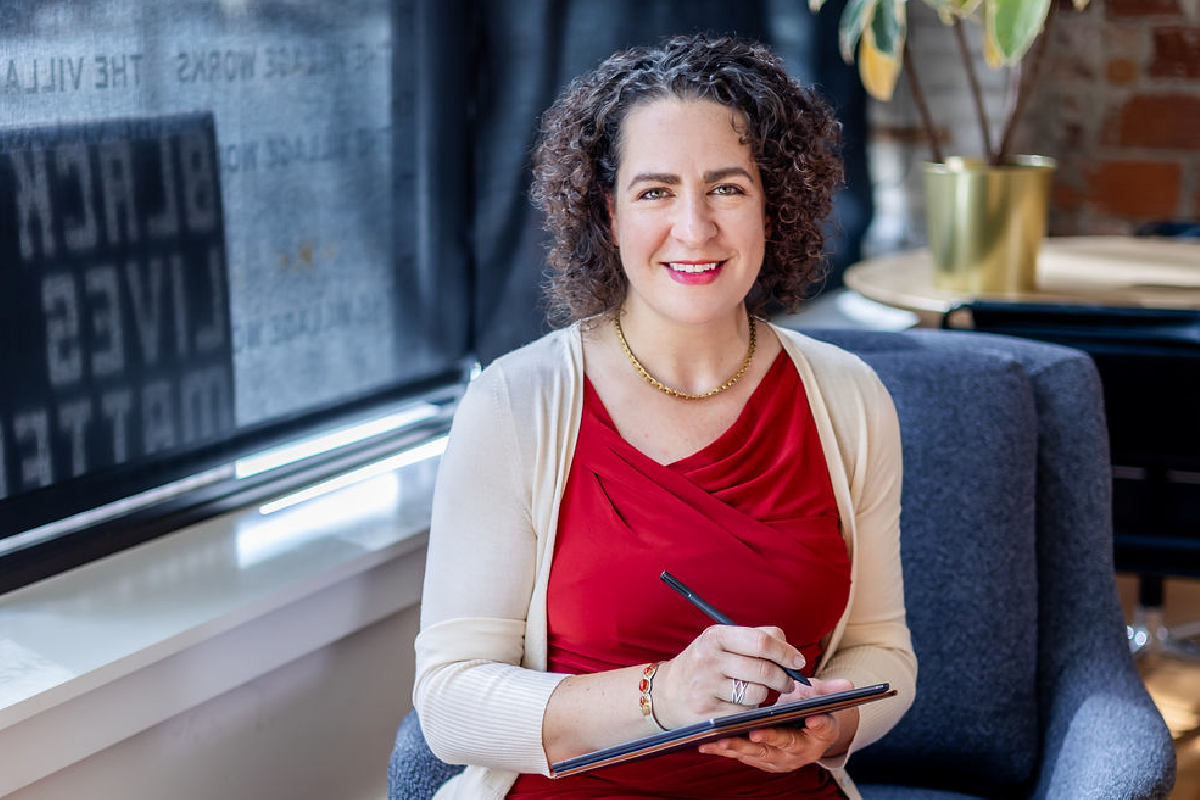
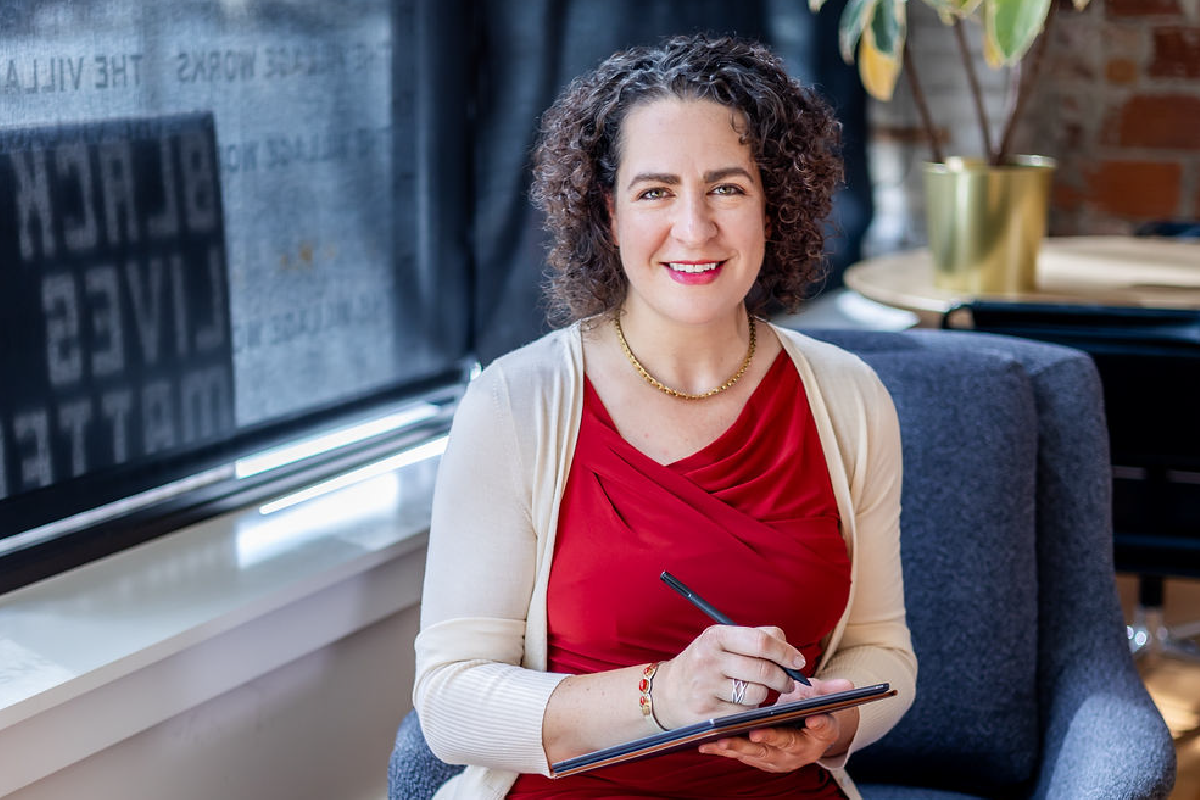
Erica Mattison, Executive Coach: [00:00:00] Welcome to Conversations with Erica. I'm your host, executive coach Erica Mattison.
Matthew Eriksen is the founder and creative director of Good Brand Partners, where he helps independent business owners create clear, cohesive brands and the systems to support them. We first met through a webinar where Matthew was a speaker, then connected over our shared alma mater, Suffolk University in Boston, and I later brought him on as a branding consultant for my business.
This conversation is for entrepreneurs, aspiring business owners, and professionals who want to communicate what makes them distinctive, build meaningful relationships, and take action before having every step figured out.
We talk about authentic branding, intentional networking, asking for help, learning through action, and growing into new levels of [00:01:00] leadership.
Matthew, I would love to hear about what you're up to these days.
Matthew Eriksen: I help business owners stand out with a brand that's next level while also helping them with the systems to back it up. I'm helping folks with brand strategy and visual identity design to website development and CRM workflow automation.
Matthew Ericksen: There are two projects that come to mind. One that is a restaurant that recently opened in Cambridge. Another which is a historic preservation and land conservation organization.
The restaurant, mainly because the owner is one of the best people I've ever gotten to work with, and for me, it really lights me up when I get to help translate a vision for someone who is so excited about their business but just needs help bringing it to life. So that's been really fun.[00:02:00]
And then the other example I gave was an organization called Essex Heritage, which is responsible for preserving the 36 or 37 cities and towns in Essex County, and they do some really wonderful programming, and I had the joy of rebranding the organization a few years back and have had the continued privilege to be their go-to designer for any of their print publications from a 40-page booklet for their Trails and Sales program to we just, revamped a logo for one of their locations, the Baker's Island lighthouse.
Matthew Eriksen: for additional context, I didn't just wake up in 2020 deciding to launch a business. I, much like many individuals, were laid off from my full-time position
during the height of the pandemic It was probably around April of 2020 [00:03:00] I was working as a marketing
professional in live entertainment And so as an organization that managed three live theaters we were the first to shut down and the last to reopen
I kind of stumbled into starting my own business But if I'm honest with myself a lot of my first clients came from the connections that I made in that previous role because folks either needed help bringing their business online or there was an opportunity for a rebrand
A lot of businesses during that time were really taking stock of their either internal team their mission how they're putting themselves out there
And so it was really wonderful that for the first couple months I just had a couple folks from my past reaching out saying Hey I saw you post about this I'd love your help on XYZ And as my business has grown I would say now about [00:04:00] 50 or 60 of my leads come through organic traffic to my website And I'm pretty proud of that Myself and now some of my team have put in a lot of work on our website our blogs good oldfashioned valuable content, but I always tell people the other 50 of my business truly does come from folks that I meet in person. I'm very active in local chambers of
commerce and professional networking events .
Erica Mattison, Executive Coach: What would you say to folks if they feel like they're introverted, and it can feel daunting to go to events and strangers?
Matthew Eriksen: I am someone who is more naturally introverted. I think in certain spaces I am much more extroverted and comfortable. One of the first recommendations I give people is to not attend those events or show up alone.
bring a friend, a past colleague, [00:05:00] even if they're not a part of your business. Just having someone else with you, I think gives you that just moment to breathe and feel like you're in a space you can head over to whether it's the bar, the charcuterie board, whatever it might be, with a friend.
Have a few moments to just take in the space. And then the second thing is to really go in with an intention. Think about what types of folks are in this space. Am I looking to meet clients? Am I looking to make connections? So a lot of the times I'm not just having conversations with potential clients, but in my business, I might be connecting with someone who could be a collaborator on a project or even just someone who's in or related to my industry, and just go in open with some sort of a plan or an intention,
Erica Mattison, Executive Coach: You can set an intention that is realistic and [00:06:00] specific, to me that is the sweet spot because then you don't feel overwhelmed.
Matthew Eriksen: I think being able to put yourself out there physically, especially now, allows you to make connections that at least I wouldn't have otherwise made if not for putting myself into rooms, walking up to people that I've never met before, , introducing myself, and really just starting a conversation Let your personality come through. Don't try to be something that you're not.
And don't be afraid to ask for help. A lot of times when I attend, let's say a, chamber event or a professional organization, I likely have at some point been in communication with that event organizer.
Taking your advice, Erica, of maybe having one or two very clear intentions or a number in mind, I might reach out to one of the executive directors I'm friendly with and say, "Hey, Leslie, I'm really looking to [00:07:00] connect with two collaborators.
Do you have anyone in mind who might be in attendance tonight?" Just putting that out there so that you are actually making it clear. You're giving a specific ask to someone whose job it is to actually help and connect you. So now when you show up to the event and Leslie or whomever it is waves me down and go oh here's someone you gotta talk to."
Don't be afraid to ask for help, especially in those spaces where folks are literally there to do just that.
Erica Mattison, Executive Coach: What are organizations often doing in their marketing and branding that, that really isn't working for them?
Matthew Eriksen: The first would be smoke and mirrors, and the second piece is a lack of authenticity or honesty. So the first, the smoke and mirror concept, is trying to be perceived as something that you are not. Usually, [00:08:00] that transpires as a single entrepreneur trying to be seen as a 20-person team.
That's an exaggeration, but I think on someone's website when they're using we when it really is just one person, right? That might actually reduce your chances to finding like-minded or aligned clients. Someone who's actually looking to work one-on-one with someone may not think that you're the right fit because you keep on using the term we, and you're losing out on someone who probably could have hired you.
Within this kind of smoke and mirrors, but segueing into the honesty is putting forth a look, a feel, messaging, and an overall vibe that just downright isn't aligned with who you are as an organization. You [00:09:00] could be really good at what you do, a consummate professional and an expert, but also be someone who's pretty casual and laid back and likes to have fun and make jokes. If what you think you want to do is try and be the opposite of who you actually are, again, you're not gonna attract like-minded clients, and this works with independent entrepreneurs as well as larger organizations.
The honesty piece that I led with was also reflecting businesses that aren't open to being honest about, " we haven't put forth the most aligned messaging," we have been trying to look like all the others," air quotes "in our industry, and we haven't been also honest about our own unique selling point, like what actually could differentiate us."
A lot of the mistakes folks make in branding, rather the [00:10:00] biggest mistake people make, is they set out with intentions to stand out from the crowd, and then somewhere along the journey, they doubt that they can actually stand on their own unique differentiators, and the result usually ends in a visual identity, a logo, a website, messaging, marketing, the whole thing that actually looks pretty similar to a lot of others in the industry.
Sometimes we as business owners or even a board of an organization for those larger teams shy away from being honest with themselves because they fear critique They fear even critique from internal teams of getting feedback of who are we as a company? What do we actually do? What's the problem that we [00:11:00] solve?
Let's reach back out to past clients, get the true, honest opinions from folks.
And by not taking those steps, you're missing out on what could differentiate you, what could allow you to stand out from the crowd.
And I think this mindset applies to whether you're an entrepreneur, whether you're making a career change, or anything in between . At the end of the day, the only thing that is going to differentiate us from AI is the human touch, your own qualities, your unique selling points if you're a business or your personality as a person. And just don't shy away from giving yourself the time to uncover what that is, and don't be fearful of what might come up in the process of doing that.
Because very similar to our earlier conversation, it's just data finding. It's just figuring out what can we throw up on the page or on the wall and see what could [00:12:00] be our next best move.
Taking the time to put everything on the table and say, "What's working so we can do more of it, and what isn't, so that we can address that gap and fill it in?" To go back to the mistakes that folks make in branding, sometimes folks are setting out to solve the wrong problem. Many folks come to me and say, "I need," air quotes here again, "just a logo," or, "I need a new website."
But once we start having a conversation about what those services or buzzwords mean, we very quickly unravel that the individual who is looking for a logo actually needs to solve a messaging gap in their marketing. Or those who needed a new website actually have a fairly well-functioning site, and maybe on the back end has some [00:13:00] pretty stellar ranking capabilities on SEO, but the look and feel, the visual identity, is what's lacking.
And so we wouldn't be able to come to that place of strategic next step without auditing what exists currently. And again, that's what's working and what is not, both internally and externally within our business and the landscape.
Erica Mattison, Executive Coach: For folks who aren't familiar with SEO, that stands for search engine optimization, would you like to give a quick description?
Matthew Eriksen: SEO, or the act of optimizing for search, is to improve your chances to be found for what people are searching for. I go online, and I type in... I'm visiting, let's say I'm in London, and I type in, "London Mediterranean restaurant," but if you don't have a keyword or phrase on your website that specifically [00:14:00] says you're in London, you offer Mediterranean cuisine, chances are you're not gonna show up in the search results.
Erica Mattison, Executive Coach: It's placement and frequency and formatting. Some of it is visible to the website visitor, and some of it is more hidden sort of behind the scenes in terms of what the person creating the content and editing the site would be aware of.
But the user wouldn't see all of that.
Matthew Eriksen: Top of show, you asked me what's present in my own business, and one thing is we're redesigning my own studio's website, and that has been a long time coming. The another phrase of, what is it? The the cobbler's children have no shoes sort of idea that we're the last to work on our own projects when we have a lot of client-facing work at the same time.
Instead of having our service [00:15:00] page for logo design be logo design, the keyword is going to be brand design package.
Now, why would I do that? I'm in the business of larger scale projects, now six years into my business. If I tried to rank it, even if I was very successful at logo design, chances are I would have folks reaching out who, quote, "Just want a logo," or might be better off at this stage of the game going on a Fiverr or asking their friend for a fifty-dollar logo.
That's not what my business is trying to provide. We're interested in providing brand strategy, full visual identity, AKA the full package. So by trying to rank for something such as brand design package, I'm weeding out those who might just be searching for that a la carte service, and I'm now [00:16:00] positioning myself as a resource for those who are probably a little bit more premium or further along in their business, and that's who I'm looking to target. If I can leave our listeners with the SEO conversation with one piece of advice is let's kick it old school. Have good, valuable content on your website that answers all the questions that a visitor might ask or be curious about.
How does this manifest? Have a clear headline. Make it very clear who you are and what you do, what is included in this service or offering. include frequently asked questions.
Have actual valuable content. The last thing that you should do is go to ChatGPT or Claude or something else and just spit out some generic information. Whether it's Gemini in Google, like that little top banner that kind of summarizes, [00:17:00] or Claude or ChatGPT, they're going to prioritize and look for original, valuable content, and that comes from just you providing the information that you would if somebody picked up the phone and said, "Hey, Erica, what do you do?
How could you help me? Tell me what that looks like. How long does it take? What's the investment? What have other people said about this? If I wanna get started, what's the first step?" That's pretty much the outline of every website page that converts, so don't make it harder than it is. Just think to yourself, "What am I trying to do? What am I trying to be seen for?" and just answer those questions.
Erica Mattison, Executive Coach: As you've been building this what have some of the shifts been in you ?
Matthew Eriksen: If you had asked me in 2020 if I knew a lot about SEO, the answer would be SE-no, [00:18:00] that I do not know.
I started my business because I got laid off, and I sat on the couch for a week and felt sorry for myself. Then with a kind push from my husband to get up off the couch and do something, a friend was looking to launch their floral design business, and I said, "I can help you with a website.
I've always been someone that tinkers with that, and in my marketing career, I've always been a designer. Let's figure this out."
So I always remained open to the opportunities that presented themselves to me, even if, and I'm not advocating for doing work for free, but even if in that moment I wasn't thinking, "Oh, this is going to be my business, and I'm gonna make six figures, and I'm gonna have a physical office that has four desks, and I'm gonna hire a full-time [00:19:00] employee, and I'm gonna have ten subcontractors at work."
No, I never planned that, let alone imagined it. But in the moment, I was open to every opportunity that came my way, which was both good and a learning experience.
I learned who I wanted to work with, the types of people or projects I do not want to ever work on again, and I made a lot of decisions, a lot of hard decisions to mold my business into something that gets me excited to wake up in the morning, that I feel proud of even in the hard, scary, uncertain moments of entrepreneurship.
For five years, I operated within a contractor model. As my services have expanded scope, I've brought in a lot of my friends, to be [00:20:00] honest, that are in the industry, and also people that I've just met at networking events, online webinars.
I reached a point a couple months ago that the amount of inquiries that I was getting, and aligned inquiries, outweighed the time that I had in a day, let alone a week or a month. And I realized, I think I'm at the point that I could take a big but pretty calculated risk here and hire a full-time employee.
And I'm really proud to say that just last week, last Thursday, I had my associate designer accept their offer, and now I feel more like a business owner than I've ever felt. Am I scared to have the responsibility of someone else's salary? Of course. Am I [00:21:00] certain that I can do it? Not 100%. But am I willing to see if it can work?
Totally. And if I also sit with and audit, let's say, my own past experience I've been able to do it up until this point, and I've surprised myself every single step of the journey. Why not leverage this window of opportunity that I have to see if I could not just 10X my business from a revenue perspective, but also getting more of my time back, letting me focus on the projects that I really want to focus on, have more me time outside of work, not feel so isolated in the day-to-day.
I'm excited to continue down this journey of entrepreneurship that has absolutely no guarantees, and to me, that's the most exciting part.
Erica Mattison, Executive Coach: Now that we just did a [00:22:00] look back, as you look forward, what are you thinking might be coming your way? Or what are you looking forward to?
Matthew Eriksen: Stepping into a leadership role in a different capacity than I've ever experienced. Any other time in my past careers where I've held a manager or leadership position, I've been working for another company, and so I still was answering to folks above me. I'm excited to see the type of leader that I become when I am not only the manager, but I'm also the owner and I am the decision maker.
That I think is also gonna be my biggest challenge because I am such a people pleaser. I want everybody to like me. I won't say I shy away from difficult conversations, but I definitely can see [00:23:00] myself really putting in the time. I'll attend classes, I'll read books I'll make the missteps along the way to be the clearest communicator, be someone that offers critiques in a very constructive manner, someone who's open to receiving critiques myself on my own leadership and managerial style.
Just yesterday I was mapping out what is the first thirty, sixty, and ninety days of my employee's experience going to look like? And I wanna make sure that there's open lines of communication, but there's also boundaries, and there's also a clear workflow. I'm more open now to admitting to my employee to say, "Hey, this is the first time I'm doing this too.
You just graduated college. This is an entry-level designer position." Yes, thankfully, this [00:24:00] was one of my most recent interns, so we already have a little bit of a rapport. However, this is the first time I'm doing this. So I ask of you to hold me accountable, offer open and honest reactions and thoughts to how I'm operating, because we're in this together, right?
I'm really excited to see the person that I'm becoming, not only now in my mid-30s, but also as a business owner who has grown and is ready for the next challenge.
As an entrepreneur, we can often check something off our list, reach a milestone, and feel like we did it.
And it's good to give yourself that time to [00:25:00] enjoy that plateau, reap the benefits. But I think the reason why a lot of us are entrepreneurs is to continually develop new skills, explore our curiosities, both internally within ourselves, but internally within our businesses as well.
I'm excited for whatever the universe has in store, and I'm very open to making the mistakes that are sure to happen.
Erica Mattison, Executive Coach: I appreciate these reflections.
We've talked about the importance of being open and seeking out feedback and receiving the feedback, which can certainly be a challenge but it can be learned.
We've talked about how to grow your network in a way that feels authentic to you.
We've talked about figuring things out as you go along [00:26:00] and adapting, learning as a daily part of life. Whatever your situation is, whether you're employed, unemployed working on making a career pivot, you have your own business, whatever the case may be, or you're a student, of course, hopefully learning is a big part of what you're doing then too. Anything you would add?
Matthew Eriksen: The only thing I would add is getting clear on what you want and feeling no shame in asking for it. whether it's attending the networking event and asking for help with introductions, whether it's asking for clarity on something, whether you're in the hiring process. For me, a lot of the times I, need additional clarity from my contractors or my team members or my clients. Don't assume that you can't ask for help 'cause oftentimes [00:27:00] I've gotten myself into holes of feeling like I should be able to figure this out, but I could also just ask my client the question and remove whatever shame I've placed on my shoulders.
I think it really does just come down to get clear on what you want, write it down. Don't worry or busy yourself with producing the most perfect plan. I think a lot of us can say, "Yeah, I have an intention. I wanna write that down. I have a goal, but now I need to spend the next weeks or months or even years preparing to get ready to begin," as opposed to saying, "This is my goal. What is the first step?" And only go as far as that next step. Once you can check that next step off, the next step after that will usually illuminate itself, and follow your gut beyond that.
Erica Mattison, Executive Coach: Absolutely. So the importance [00:28:00] of breaking down big projects into steps, and it's okay if you don't know what the seventh step is, as long as you can figure out the first small step, that's what you need to get going. And then we also talked extensively about marketing and topics like search engine optimization and why that's important to have an understanding of and be implementing best practices.
Matthew Eriksen: A lot of that comes back to the conversation around authenticity as well, and honesty. Especially with things like AI, you want to be able to stand out in a crowded market. It's easier to differentiate yourself when you're open to standing out than trying to look like everybody else, even as comfortable as that might be.
Also challenge yourself to say, "If I were to stand firm on my values, on how I speak, on how I dress, [00:29:00] on how I produce a certain output or quality or whatnot can I feel confident enough to stand on that? And can I put that out in the world, out for the world to see in my marketing, in my messaging, in my colors, in my logo," all that stuff.
Erica Mattison, Executive Coach: Thank you so much for taking the time, Matthew. It's been a pleasure speaking with you, and I look forward to our next conversation. I wish you the best as you continue to explore and learn and grow and serve and create in your business.
Matthew Eriksen: Thank you, Erica. It's been a joy to reconnect with you all these years, and I'm so excited that your own community, your listeners have such a wonderful resource as this podcast.
Erica Mattison, Executive Coach: You've been listening to Conversations with Erica. I'm your host, Erica Mattison. If this [00:30:00] episode inspired you to explore career or leadership growth, visit ericamattison.com and let's get started