Conversations with Erica
From Education to Entrepreneurship: Starting a Business After Retirement
Episode Transcript
ERICA MATTISON:
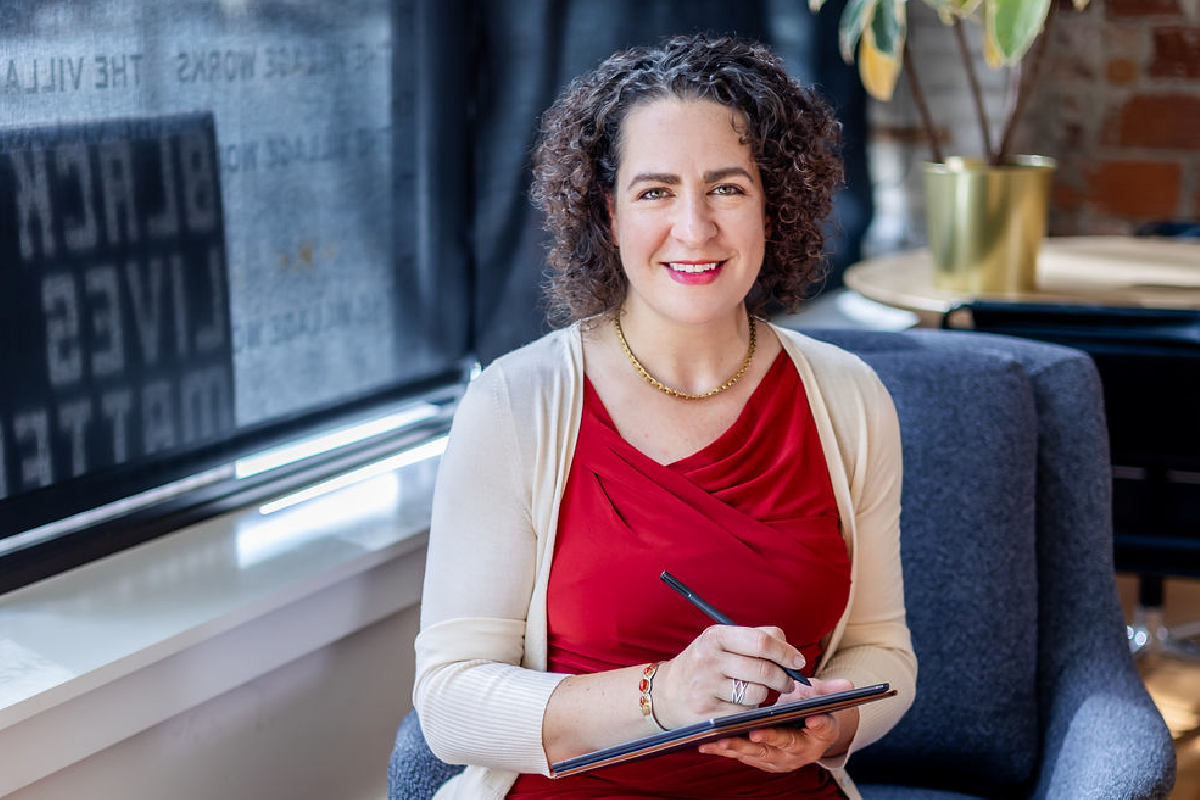
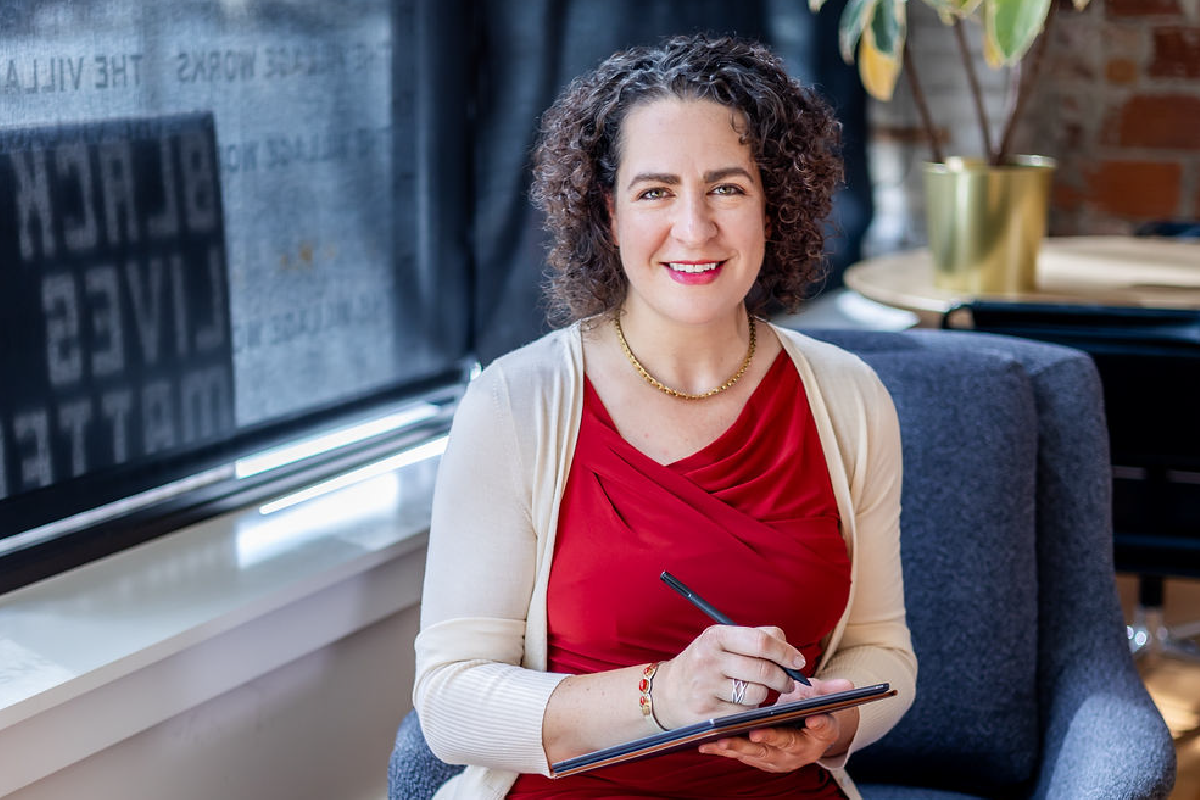
Welcome to Conversations with Erica. I'm your host, executive coach Erica Mattison.
Today I'm speaking with Cheryl St. Onge, co-owner of No Strings Attached Lemoncello, a Cape Cod-based business she launched with her longtime friend and fellow retired Worcester Public Schools educator, Joan Sheary.
Cheryl's career has included roles as a teacher, school administrator, community liaison, and NCAA referee. Now she's applying her leadership, communication, and relationship-building skills to entrepreneurship as the Massachusetts company expands its distribution.
I work with many people from education who wonder what other opportunities could exist for them. Cheryl's career pivot invites us to consider: How can we recognize our transferable skills and use them to create something entirely different?
I am delighted to be here today with Cheryl.
Cheryl, tell us a little bit about what you're up to these days, and then we'll get into how you got into this and what you're looking forward to next.
CHERYL ST. ONGE:
We are here right now at the Dedham Farmers Market. My name is Cheryl St. Onge. In the background, I don't know if you can see her, is my business partner and friend for about 40 years, Joan Sheary.
We are co-owners of an alcohol business as retired teachers. We retired in 2015, and we started our own alcohol company. As teachers, we knew how to drink, but we knew nothing about setting up an alcohol business.
It's been quite a long journey, starting before COVID, and we are now the proud owners of No Strings Attached Lemoncello.
ERICA:
So it's quite a journey to go from being in the education system to having this kind of business. What made you want to start this kind of business?
CHERYL:
Joan's mother-in-law originally came from Italy, and she would make limoncello with 150-proof grain alcohol. It would curl your hair, curl your toes. It was awful.
Joan's husband had said to us, "When you ladies retire from teaching, why don't you take Nanny's recipe and see what you can do with it?"
Well, Nanny's recipe went out the window, so we tried to come up with our own. There was a lot of experimenting, a lot of boozy nights, and a lot of encouraging people who served as advisors and mentors and helped us along the way to create this product.
It's made with organic milk, Meyer lemons, and rum.
ERICA:
Okay, so it takes a village to create and grow a business, right?
CHERYL:
Sure does.
ERICA:
Say a little bit more about that for the folks who are listening and thinking about maybe starting or growing their own business and aren't sure exactly how to navigate that, especially if they're coming from some other kind of space.
CHERYL:
We reached out to a very good friend we both knew, a restaurant owner who had also started his own beer business. He has been our mentor.
He was one of the original people who said, "Think outside the box. How can you not just drink this product? What else can you do with it?" So he has been a huge advisor.
Originally, we were out on our own. We would sell it to family and friends, and they were the original tasters. They would tell us, "It's too sweet. It's not lemony enough. It's not strong enough." They gave us some great suggestions.
ERICA:
They're like your focus groups?
CHERYL:
Yes.
We knew that as bootleggers, which is what we were doing, making it in our kitchen, we could only go so far. We're legal now, but at that time we were making it ourselves.
We knew that if we really wanted to go a step further, we had to find a distillery.
After many emails and phone calls, we found Spicy Water Distillery in Millbury, Massachusetts. The owner of the distillery is Barry Bacon, and he became another part of our village.
Barry tasted it and said, on a handshake, "I will make it for you, but you use rum, and I produce rum."
So it was a great partnership. That's basically where we're at, and that's how we're here today.
ERICA:
So much of growing a business is connecting with the right people at the right time, the people with the skills and the knowledge.
CHERYL:
The team, the bandwidth.
ERICA:
It sounds like that was how it went for you.
CHERYL:
It was.
He has a farmer's distillery license, so most of the products he uses are farm resources. He gets his cane sugar and organic milk from local farms near the Millbury area.
That's great because that's part of the focus here, using products that are naturally made.
ERICA:
So you're using local products and working with local small business owners and producers.
Say a little bit more about what you were doing before you launched the business and the kinds of skills and qualities you developed that are proving valuable in the business today.
CHERYL:
I retired as an assistant principal in the city of Worcester. Everybody out there knows middle school students. Every day is different.
Prior to that, I was a physical education teacher, and I also used to referee Division I field hockey [additional words unclear]. So I was working with coaches and listening to parents on the sidelines.
Once I became an assistant principal, I worked with parents on a day-to-day basis to make sure their children were getting the right education.
Joan retired as the head of the dance department. We met when I was at Burncoat Middle School in Worcester, Massachusetts, and she headed the dance department for both the middle school and Burncoat High School.
We've been friends for years. This started as just a thought, and then we started, and here we are.
ERICA:
When you think about even the notion of retirement, or this question of "What's next?" when someone moves on from a vocation of many years, say a little bit about how you think about this next chapter you're now in.
CHERYL:
I can tell you that if you had said to me when I was retiring, "You will be an owner of an alcohol business," it would not have been on my bingo card.
It just totally evolved.
You have to have a plan, and this wasn't the plan. I was just going to work at a golf course, play golf, and go to the beach. Our business is based out of Cape Cod, down in West Dennis, Massachusetts.
That was kind of the plan, and now this has taken over my life.
Do I get to play golf anymore? No. Have I seen the beach? I have not seen a beach on Cape Cod in a long time.
ERICA:
Wow.
CHERYL:
But it's because we are a company of two.
We actually have two interns, college students who are helping us with some of the social media aspects because we're dinosaurs. I know a little bit about it, but not a lot.
ERICA:
It's great to be able to find people who have complementary skills, experiences, and interests so they can serve in capacities that aren't as good a fit for you.
CHERYL:
Right.
To give you an example, I'm going to give a shout-out to Grace Powers. Grace is a student at Trinity College, but she bartends in the summer, so she is doing our videos on TikTok showing how to take our product and make different drinks.
Our other intern is Erin Hatton. Erin is studying public relations at Auburn University, so she does Instagram and Facebook posts.
ERICA:
Terrific.
CHERYL:
Thank you.
ERICA:
So you have a team. You have a little team.
It's interesting because you were talking about having plans but also being open and flexible with those plans. Maybe you had visions of golf and beach time in your future, and that isn't what ended up happening.
But you saw an opportunity. It was appealing to you. You had somebody you could work with who you enjoy being around. You had this idea for a product and supportive people around you.
And you said, "Let's go do this thing."
CHERYL:
Let's go do it.
The big thing was, once we were officially licensed by the state of Massachusetts, then what do we do next?
We started going to different liquor stores to see if they would sell our product. We've now been in business officially for about two years. We became legal in May 2024, and we're in about 30 liquor stores right now.
We were also trying to get into restaurants, and we found that we just can't keep up. We're a company of two, so we've put restaurants on the back burner.
Our focus right now has been liquor stores as well as farmers markets.
ERICA:
Congratulations, because that's a lot of progress for just two years.
For folks who are trying to grow their businesses, regardless of what type of business it is, what would you say are some of the best practices you've been able to implement?
CHERYL:
I would read. Go on the internet. Go on ChatGPT or whatever AI forum you use. Read about it. How do you produce it? How do you grow?
We did an awful lot of research even before we found our distiller. When we were doing it unofficially ourselves, we would absorb everything we could find.
There are also so many groups out there. On the Cape, there's a group called WE CAN, a women's group that supports women in business.
We also went to a symposium through Martignetti Distribution called Women in Alcohol. It's not women alcoholics, but women in alcohol as a business.
That was an amazing resource, to hear and listen to other women in the same field as we are.
I think you have to look and see what is out there and don't hesitate to try it.
ERICA:
So do your research. Read. Use AI. That can be very helpful and a big time-saver.
Find out what kinds of groups and associations are out there that could be resources and places to connect with people.
CHERYL:
Absolutely.
One of the reasons we're here in Dedham is that they were willing to accept alcohol at their farmers market.
Last year, Governor Healey signed a law that allowed alcohol made at a farmer's distillery, farmer's winery, meadery, or brewery to be sold at farmers markets with local approval.
Dedham has been wonderful in accepting us.
One of the reasons we're here is to get our name off Cape Cod. We want to be big girls and see what happens. Maybe somebody will come by and say, "Gee, I own a liquor store."
ERICA:
Right.
CHERYL:
Or maybe, "I'd like to have your product at our golf course," or something along those lines.
ERICA:
You never know, right?
When you're at something like a farmers market or some kind of festival, you never know who you might meet or where those conversations might lead.
You're planting those seeds and then nourishing them and seeing how long it takes for them to grow.
CHERYL:
Exactly.
Lately, an awful lot of our business has come from our participation in farmers markets. We're not only here, we're also in Chatham, Massachusetts, and Mashpee.
ERICA:
So you're working on growing your presence across the state, tapping into relationships and opportunities in different parts of Massachusetts.
CHERYL:
Yes.
The distillery is located in Millbury, just outside of Worcester, and we're in a couple of stores in Worcester.
We're now branching out into places like Sudbury, and we have a nice lead there. So Sudbury, West Concord, and Maynard.
But again, we have to remember we're just a company of two.
You're looking at half of the marketing, distribution, and billing. Every single label on our bottles is put on by Joan and me.
ERICA:
What would you say a couple of the main challenges are?
CHERYL:
We're made in small batches.
People like limoncello, and they like to drink it in the summertime. It's also a great Christmas gift.
But there is a lull between, say, January, February, and March, and then it starts picking up again.
ERICA:
So are there any plans in terms of how you'll ramp up production to be able to meet those demands?
CHERYL:
Yes, actually.
We've spoken to the distiller. He makes rum, so he's going to run his still almost continuously to keep up with the rum supply so that he can make more for us.
ERICA:
That's great. It's helpful that someone you're already working with is able to accommodate the demand.
CHERYL:
I can't speak highly enough of Barry Bacon at Spicy Water Distillery.
He wants to see us succeed. He and our mentor in Worcester have been great advisors.
Barry has already gone through this himself. He was a teacher for a while and then opened his own distillery and developed his own products.
ERICA:
So he can relate.
CHERYL:
He can relate to everything.
ERICA:
You're going through similar journeys.
CHERYL:
Exactly.
ERICA:
Any other big challenges that you're facing right now?
CHERYL:
They're all challenges.
ERICA:
Every day is an adventure as a business owner.
CHERYL:
We have our highs and our lows. Something great might happen, and then all of a sudden something else happens.
That's the beauty of creating a new business.
I look forward to the future. I think we have a very successful future, and hopefully people will come out and look for us.
And if not, I'm going to ask that you go to your local liquor store and ask for No Strings Attached Lemoncello. If they don't have it, tell them to look us up on the website, nostringsattachedlemoncello.com.
Most limoncellos are spelled "limon." Ours is L-E-M-O-N-C-E-L-L-O.
ERICA:
Absolutely.
As you look ahead, what are you looking forward to with the business and beyond?
CHERYL:
We really haven't thought about beyond.
Ideally, I suppose we would love some huge conglomerate to come by and say, "Hey, ladies, I want to buy your product."
But it's too soon to think about that. We're worried about how we're going to get our products out there now.
Tomorrow we go to the distillery and pick up another batch. Every day is a different journey.
So I can't really say what will happen in the future.
ERICA:
Sure. Thanks so much for being on.
CHERYL:
It was a pleasure. Thank you.
ERICA:
You've been listening to Conversations with Erica.
I'm your host, Erica Mattison. If this episode inspired you to explore career or leadership growth, visit ericamattison.com and let's get started.